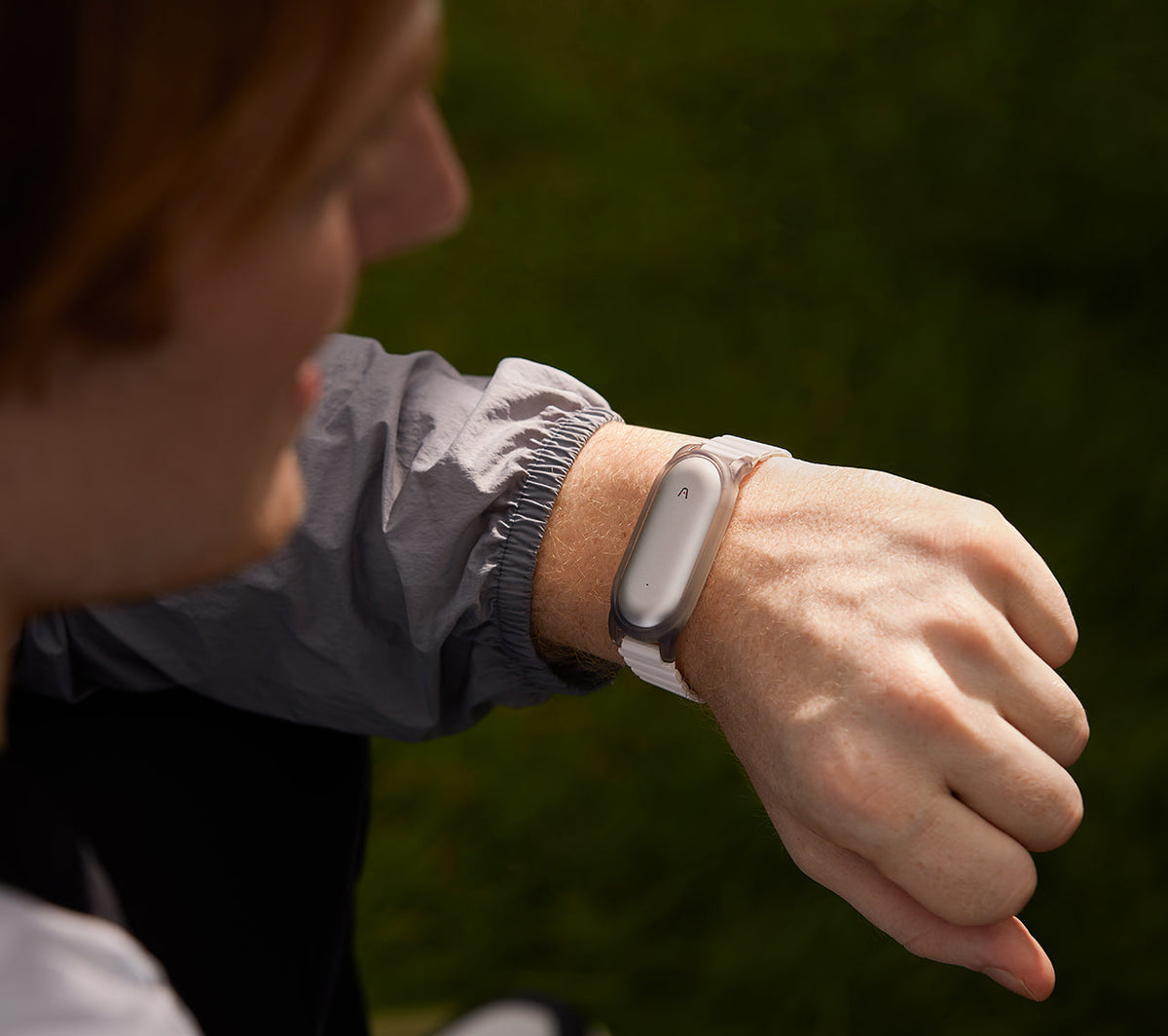
Plaud NotePin is a wearable voice recorder for people who want to turn in-person conversations into usable notes. It combines a compact recording device with Plaud’s transcription and summarization service, making it relevant to interviews, client discussions and spoken ideas. This is the original NotePin, which Plaud launched in August 2024. [1, 2] The recorder can attach to clothing with a magnetic pin or clip. Plaud also offers wristband and lanyard wearing options; check the selected package because those accessories are sold separately on the current product page. Plaud specifies 64GB of storage and up to 20 hours of continuous recording. Those are manufacturer specifications, rather than results from our own testing. [1] Recording is deliberately started and stopped. Plaud’s instructions say to press the center of NotePin until one vibration confirms that recording has begun, then press again until two vibrations confirm it has ended. That gives the recording session a clear beginning and end. Before starting, let everyone involved know and obtain their agreement, as Plaud’s recording guidance advises. [3] After capture, the Plaud account and app are part of the workflow for managing recordings and using the AI service. Plaud documents account-based access through its app and web interface, with cloud synchronization enabled for that workflow. Its AI processing guidance for app version 4.0.x or later explains that requesting transcription or summarization sends the relevant audio or text to a service provider for processing, including when cloud storage sync is disabled. Recording hardware and AI processing should therefore be considered separately when deciding how to handle a conversation. [4, 5] The free Starter plan includes 300 transcription minutes each month. That is five hours of audio for transcription, a useful number to compare with the meetings or interviews you expect to process. Paid plans provide higher allowances. The practical question is how much recorded audio you want converted into notes each month; the hardware’s recording capacity and the plan’s transcription allowance serve different purposes. [6] NotePin is intended for in-person capture: Plaud says this model does not support phone-call recording. Its magnetic accessories also carry a specific restriction: Plaud advises people with pacemakers against wearing NotePin on the chest. Check the official product page for the exact accessory package and current purchase options before ordering. [1] Sources (checked 26 October 2026): [1] Plaud NotePin product page — https://www.plaud.ai/products/plaud-notepin [2] Plaud Our Story — https://uae.plaud.ai/pages/our-story-1 [3] Plaud App Recording Guide — https://eu.plaud.ai/pages/app-recording-guide [4] Plaud device/account comparison — https://in.plaud.ai/blogs/news/choosing-between-plaud-note-and-plaud-notepin-which-ai-device-suits-you-best [5] Plaud AI processing guidance — https://support.plaud.ai/hc/en-us/articles/63440001909913-How-your-data-is-used-in-AI-processing-for-v4-0-x-or-later [6] Plaud AI plans — https://www.plaud.ai/pages/plaud-ai-plan-pricing

Oura Ring 4
A screen-free ring format for exploring personal activity and sleep trends.