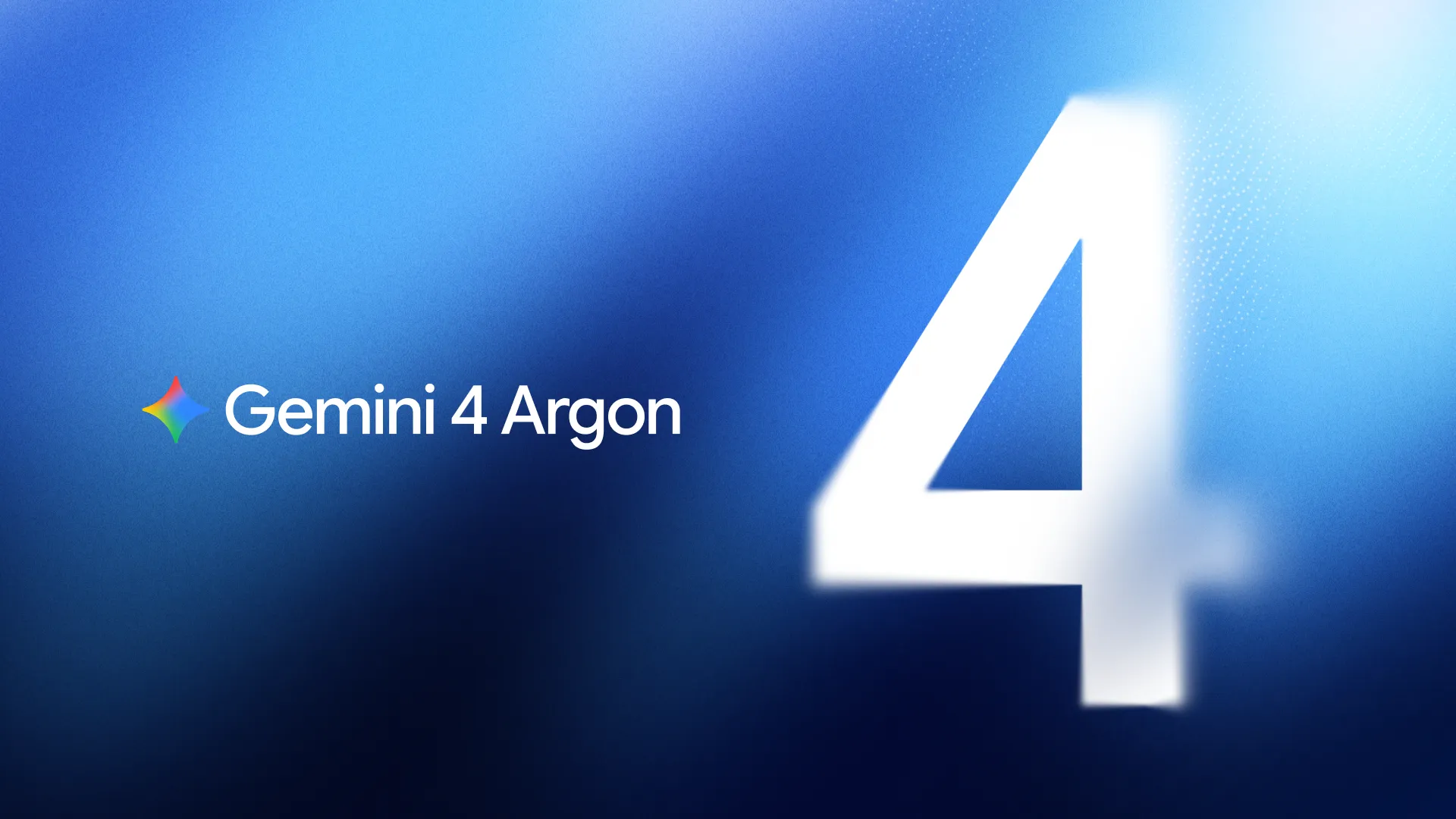
Artificial intelligence is shifting from answering individual queries toward carrying out multi-step professional workflows. Google’s Gemini 4 Argon targets that shift, with a focus on engineering, enterprise knowledge work and cybersecurity.
Google announced wider access on October 13, 2026. For developers and small teams, the useful question is where a reasoning model can take work off a queue—and where its output still needs checking.
The architecture of reasoning
Google DeepMind’s model card describes Argon as a sparse mixture-of-experts transformer with native support for text, vision and audio inputs. It is designed for investigations, multimodal document analysis and demanding technical work.
A large context window can help a model work across related material, but it does not guarantee complete recall or accurate conclusions. The model card explicitly warns that Argon can hallucinate and may encounter slow responses or timeouts. Its stated knowledge cutoff is March 2026, so current information needs fresh sources.
For a team considering document analysis, start with a bounded collection and questions whose answers can be checked. Require the system to identify the supporting passage, then inspect the passage yourself before relying on a conclusion. That is especially useful when documents contradict each other or use different versions of the same specification.